
Fabio Mauri is one of the most prominent voices of the Italian avant-garde of the post war period. He lived between Bologna and Milan until 1957, when he moved to Rome. In 1942, he started the magazine II Setaccio [The Sieve] with his friend Pier Paolo Pasolini. He taught Aesthetics of experimentation at the Academy of Fine Arts of L’Aquila for 20 years. He was invited to the Venice Biennale in 1954, 1974, 1978, 1993, 2003, 2013 and 2015, and to DOCUMENTA (13) in Kassel in 2012.
Several important themes can be found in Mauri’s work, all shaped into his works of art: the Screen, the Prototypes, the Projections, the Photography as Painting, the substantial Identity of Expressive Structures, the lasting relationship between Thought and World and between Thought as World. Mauri’s work, as complex as an history essay, becomes his autobiography, compact and uniform in its development and multifaceted in the attention to the contemporary world: an analysis where the fate of the individual and history co-exist.
OPERA IN CANTIERE “SENZA” 1975
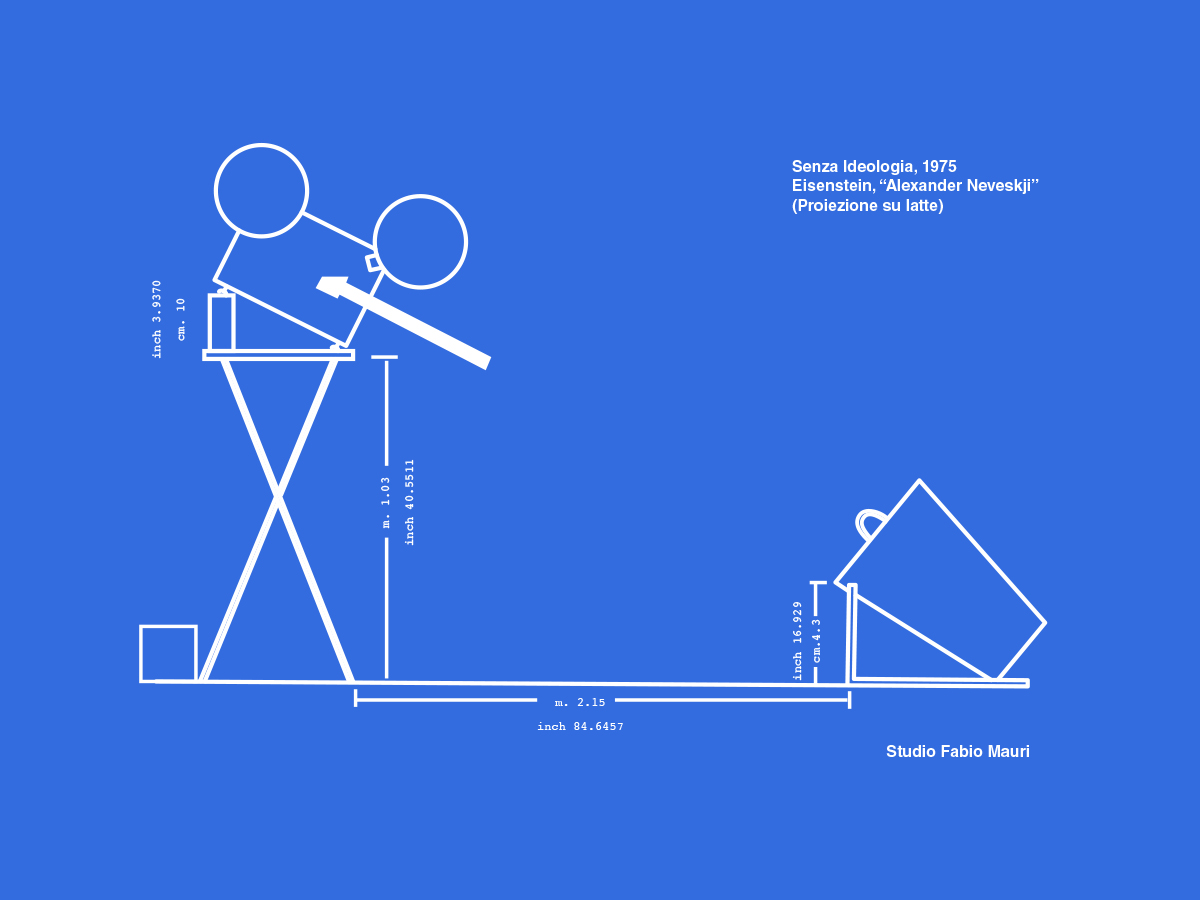
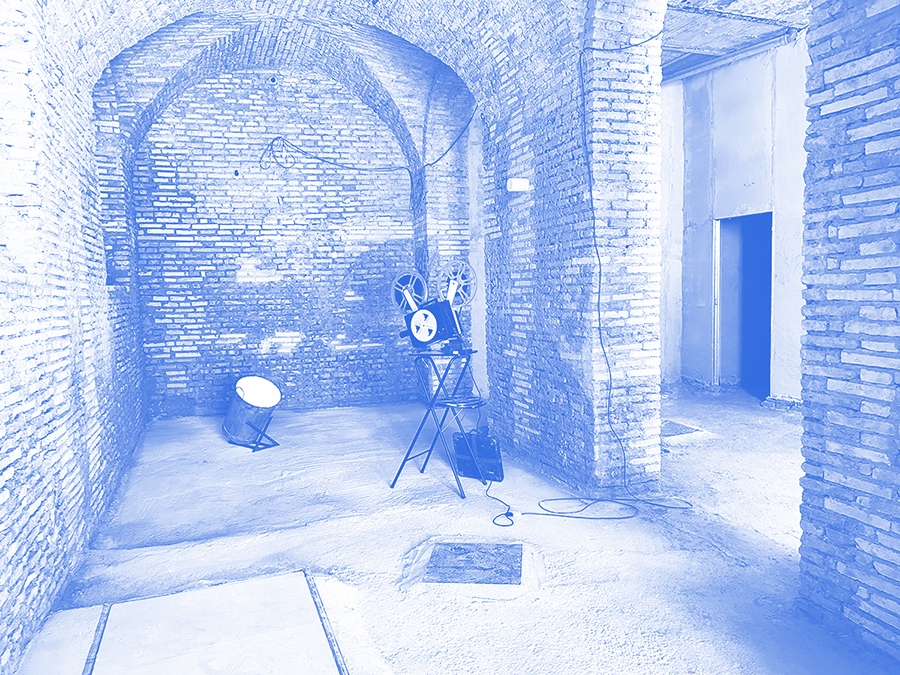
In the actions of “Senza” a series of intellectual works, organisms, complex drawings, such as films, are exhibited. Projected on the ‘world’ as on a “screen”, neither neutral nor equal, endowed with form and signification and, that is, with its own symbol. The contemporary debate is moral, political and ideological.
In the screenings of “Senza”, through films by “author”, (not surprisingly, often, European), essential cuts of modern culture are identified. Projected, as if introjected, on objects and bodies. Art scrutinizes the historical category of its time. The intellectual product operates as a protagonist: it possesses strength and specific, ‘physical’ weight, in the order of the foundation of the plot, that is, of its symbolic constituent. It does, because it is, history and world.